Suit Fabrics Explained: Wool, Linen, Cotton and What Actually Works in Australia's Climate
Most people choose a suit by how it looks on the hanger. The fabric is an afterthought — a tag they check when they are already committed to the colour and the cut.
That is a mistake. In Australia, where the climate ranges from Brisbane's subtropical humidity to Melbourne's changeable winters to Tasmania's cool evenings, fabric choice has a direct impact on how a suit looks after two hours of wear, how comfortable it is throughout the day, and how long it lasts. This is especially true for weddings, race days, and any occasion that involves extended outdoor time.
This guide breaks down the main suit fabrics clearly and practically, so you can make a genuinely informed decision when you are being measured for your next suit.
Wool: Why It Is the Default and Why That Is Justified
Wool is the benchmark fabric for men's suiting for reasons that have not changed in a couple of centuries. It holds its shape through a full day of wear. It breathes genuinely well despite its warmth. It resists wrinkles better than almost any other natural fabric. And in a quality weave, it drapes cleanly over the body in a way that most other fabrics cannot match.
The quality of wool is measured by its micron count (the thickness of the individual fibre), which is often indicated by a 'Super' number — Super 100s, Super 120s, Super 150s. The higher the number, the finer the fibre, and generally the lighter and more refined the hand-feel of the cloth.
For Australian conditions, Super 100s to Super 130s represent the practical sweet spot. Finer than Super 130s tends to be more fragile — suitable for a once-a-year wedding suit but less practical for regular professional wear. Super 100s is durable and versatile enough for everyday wear while still feeling and looking genuinely good.
For Queensland and northern Australia, a lightweight Super 120s in an open weave (the weave structure, not just the fibre count, determines how much air moves through the fabric) is a year-round option that handles the heat without looking casual.
Linen: The Summer Option With Trade-offs
Linen is the obvious choice for hot-weather suiting, and there are good reasons for its reputation. It is extremely breathable — better than any wool — and it feels cool against the skin in ways that synthetic blends simply cannot replicate.
The trade-off is wrinkling. Linen wrinkles. It wrinkles when you sit down, when you lean against a wall, when you spend an hour in a car. Some people find this acceptable — a slightly rumpled linen suit reads as relaxed and intentional in the right setting. For a Noosa beach ceremony or a Gold Coast hinterland venue in January, it can look completely right.
For anything more formal, or any setting where you need to look sharp across a full day including photographs, linen alone can be a challenge. The practical answer is a linen-wool or linen-cotton blend — the linen provides the breathability, and the wool or cotton content gives the fabric better wrinkle resistance and structure.
Cotton: Versatile but Know Its Limits
Cotton suits occupy a useful middle ground. They are more breathable than wool in direct heat, hold their shape better than linen, and have a slightly more casual, textured aesthetic that works well for outdoor weddings and relaxed professional settings.
The limitation with cotton is that it does not hold a crease as well as wool over a long day, and it tends to look less refined in formal settings. A cotton suit for a garden party or a beach wedding can look excellent. The same suit in a formal boardroom or at a traditional church ceremony reads as slightly underdressed.
For most Australians, cotton suiting works best as a summer-specific choice rather than an everyday option. A fine cotton suit in stone or tan for the warmer months, alongside a wool suit for cooler months, is a sensible wardrobe approach.
Blends: Often the Best Practical Answer
Fabric blends — wool-linen, wool-cotton, wool-silk — are often the most practical choice for Australian conditions because they combine the best properties of each component. A wool-linen blend gives you structure and breathability. A wool-silk blend gives you lightness and a subtle sheen that is particularly effective for wedding suits and formal occasions. A wool-mohair blend holds its structure exceptionally well and has a particular lustre that works very well for evening events.
When consulting on a new suit, do not dismiss blends as a compromise. In many cases, a well-chosen blend outperforms either component used alone for Australian conditions.
What to Choose for Your Specific Occasion
Wedding in summer Queensland: lightweight Super 120s wool in an open weave, or a wool-linen blend. Navy or light grey. Breathability is the priority.
Wedding in Victoria or Tasmania in cooler months: mid-weight Super 100s wool. The structure holds through cooler air, and the suit looks more substantial in lower-light photography.
Brisbane or Gold Coast race day: lightweight wool in a springtime weight. This is a full-day outdoor occasion — breathability and wrinkle resistance both matter.
Professional wardrobe in a Queensland city: Super 100s to Super 120s wool in an open weave. Navy and charcoal carry you through most situations. One linen-blend option for the hottest months adds versatility.
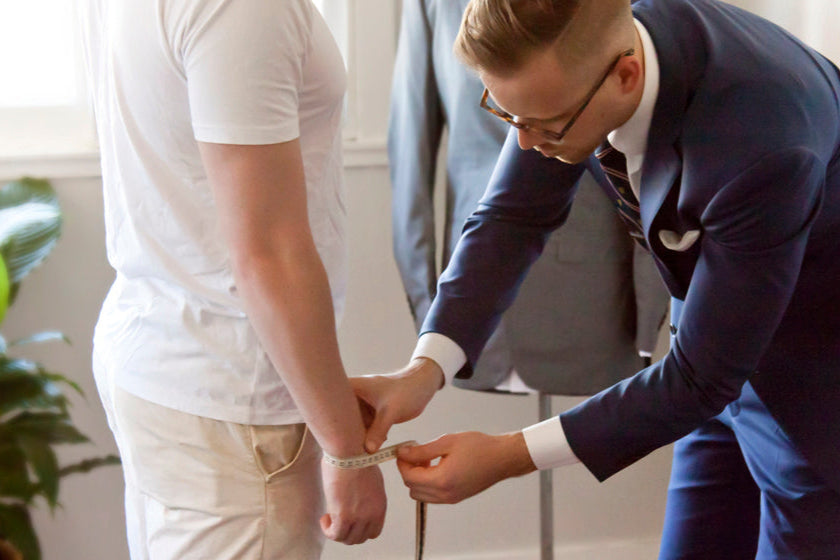
At any Suit Society studio, the fabric discussion happens as part of your consultation. You handle the swatches in person, so the weight, texture, and drape are immediately apparent rather than being described in abstract terms.
Book a consultation at suitsociety.com.au/pages/book