How a Woman’s Suit Should Fit, and What Made to Measure Fixes That Off the Rack Can’t
Most women who come to us for a tailored suit have a similar story. They found a jacket they liked, in a fabric they liked, and it fitted beautifully in one place and badly in another. The shoulders were right, so the bust pulled. The bust was right, so the shoulders slid off. They bought the trousers a size up for the hip and spent the next year hitching them at the waist.
None of that is a problem with your body. Ready to wear women’s suiting is cut to a single fit model per size, and very few people share her proportions in every direction at once. Men’s off the rack has the same issue, but women’s tailoring has more variables to get right: the relationship between shoulder, bust and waist, and between waist, hip and seat.
Here is what a well fitted women’s suit should look like, point by point, and where made to measure makes the difference.
The quick answer
A women’s suit fits well when the shoulder seam ends at your shoulder bone, the jacket buttons without pulling or an X shaped crease at the fastening, the lapels lie flat against your chest, you can lift your arms without the whole jacket riding up, and the trousers sit at your chosen rise without gaping at the back of the waist. If you can tick all five in an off the rack suit, buy it. Most women can’t, and that is where custom earns its place.
The jacket
Shoulders come first
The shoulder is the one part of a jacket that is genuinely difficult to alter, which is why tailors fit it first. The seam should finish at the edge of your shoulder bone. If it sits inside, the sleeve head will pull and you will see a dent at the top of the arm. If it overhangs, the jacket looks borrowed.
There is also a style choice here. A structured shoulder with soft moulded padding gives a sharper, more formal line. A natural shoulder, with little or no padding, follows your own shape and reads as more relaxed. At Suit Society both are available, and the right answer depends on your frame and where you will wear the suit more than on fashion.
Bust and chest: where most jackets fail
This is the single most common problem we see. A jacket that fits the shoulders often pulls across the bust, which shows up as horizontal tension lines at the top button or lapels that bow away from the body. Buying a size up fixes the bust and ruins the shoulders.
A made to measure pattern adjusts the bust independently of the shoulder, so the front of the jacket has room where you need it and none where you don’t. The lapels should lie flat and the fastening should close cleanly, with no gap when you stand naturally.
Waist suppression
Suppression is the tailoring term for how much the jacket curves in at the waist. Too little and the jacket hangs like a box. Too much and it pulls when you sit or reach. The aim is a gentle line that follows your shape without gripping it, so you can move your arms forward, drive, or present to a room without the jacket working against you.
Length and button stance
Jacket length is personal and depends on your height and what you are wearing underneath. A shorter jacket that finishes at the high hip suits high waisted trousers and lengthens the leg. A longer jacket that covers the seat feels more traditional and is often easier to wear with a skirt. The button stance, meaning where the top button sits, should land at or just above your natural waist. Get that point wrong and your proportions look off no matter how good the fabric is.
Sleeves
Sleeves should finish around the wrist bone, showing a little shirt cuff if you are wearing one. They should be wide enough to move in but not so wide they flap. Arm length differences between left and right are common and easy to account for in a custom pattern.
The trousers
Waist, hip and seat
Women’s trousers have to reconcile waist, hip and seat, and off the rack sizing is built around a fixed ratio between them. If your hip to waist difference is larger than the pattern assumes, you get the classic gap at the back of the waistband. If it is smaller, the trousers pull across the hip and pockets flare open.
A made to measure trouser is cut to your actual measurements for all three, which is the only reliable way to fix both problems at once.
Rise
The rise is the distance from the crotch seam to the waistband. A high rise sits at your natural waist and pairs well with shorter jackets and tucked shirts. A mid rise sits lower and feels more casual. Neither is right or wrong, but the rise should match how you like to wear the suit, and it should never pull at the front or sag at the seat.
Leg and length
Wide legs, straight legs and slim tapered legs all work in tailoring. What matters is that the leg hangs cleanly from the seat without folds, and that the length suits the shoes you will actually wear. Decide this at the fitting with those shoes on. A wide leg cut for a block heel will look wrong with a flat loafer.
Skirts, dresses and separates
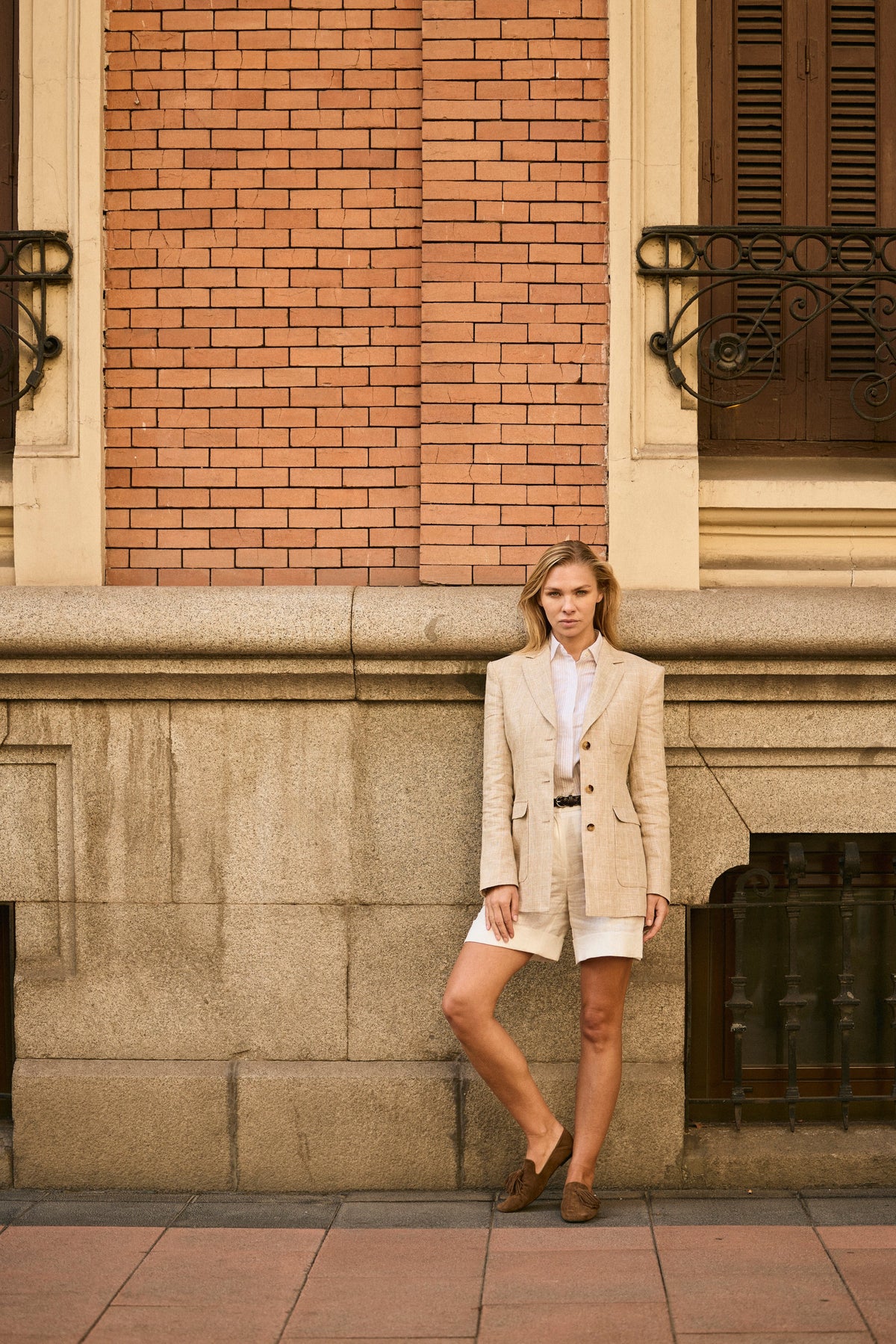
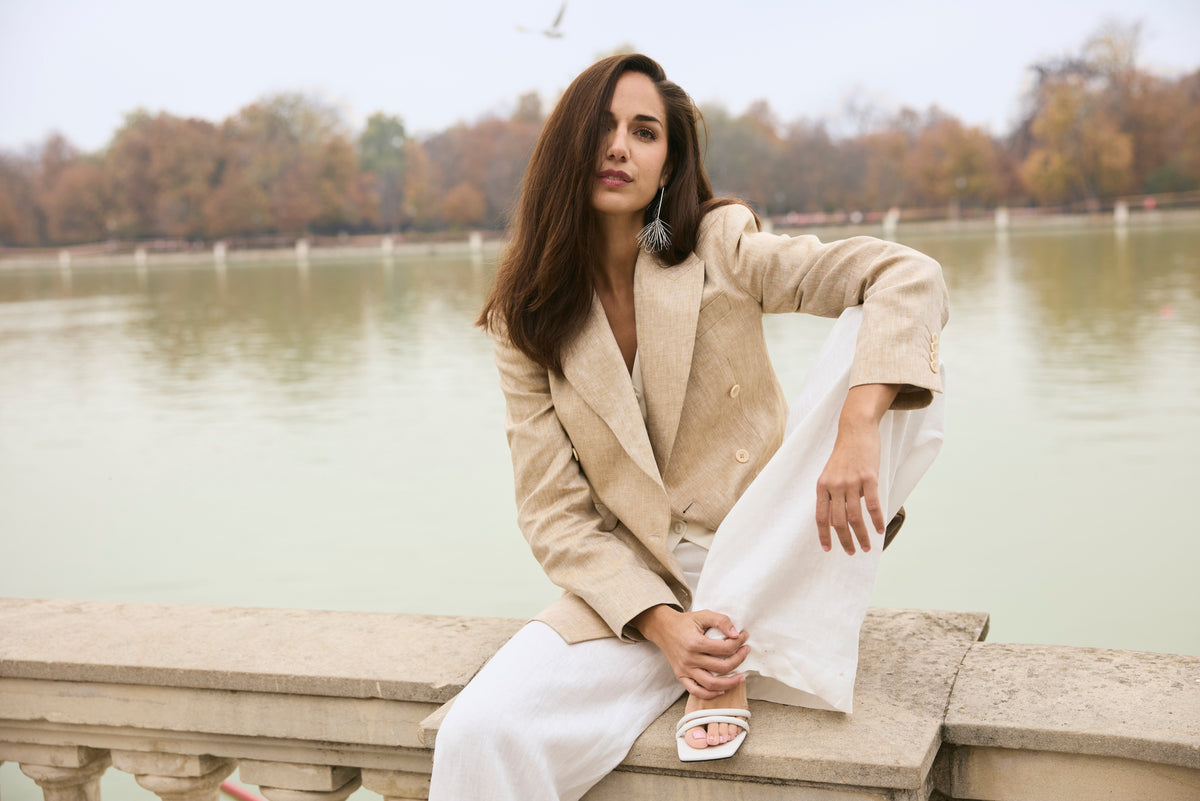
A tailored suit doesn’t have to mean a matching trouser. A jacket can be ordered on its own, or paired with a skirt or trousers in a contrasting cloth. Separates are often the smartest way to build a working wardrobe, because one well fitted navy jacket can be worn with three different bottoms. Our women’s suiting collection shows single breasted and double breasted jackets alongside full suits, and every piece can be adjusted in cut and cloth at your consultation.
Choosing the right cloth for Australian conditions
The cut will only look as good as the fabric allows. For most Australian workplaces, a lightweight wool in navy, charcoal or a mid grey will carry you through most of the year. In Brisbane, the Gold Coast or the Sunshine Coast, an open weave wool or a wool and linen blend breathes noticeably better through summer. Our guide to suit fabrics and what actually works in Australia’s climate goes into this in detail.
Construction matters too. A canvassed jacket moulds to your shape over time, while a fused one can feel stiffer and warmer. If you are weighing those options, our explainer on fused, half canvas and full canvas jackets sets out what each one gives you.
What made to measure actually involves
At Suit Society, women’s tailoring follows the same process as our men’s service:
1. Complimentary consultation. We talk through where and how often you’ll wear the suit, look at your existing wardrobe, and handle fabrics in person.
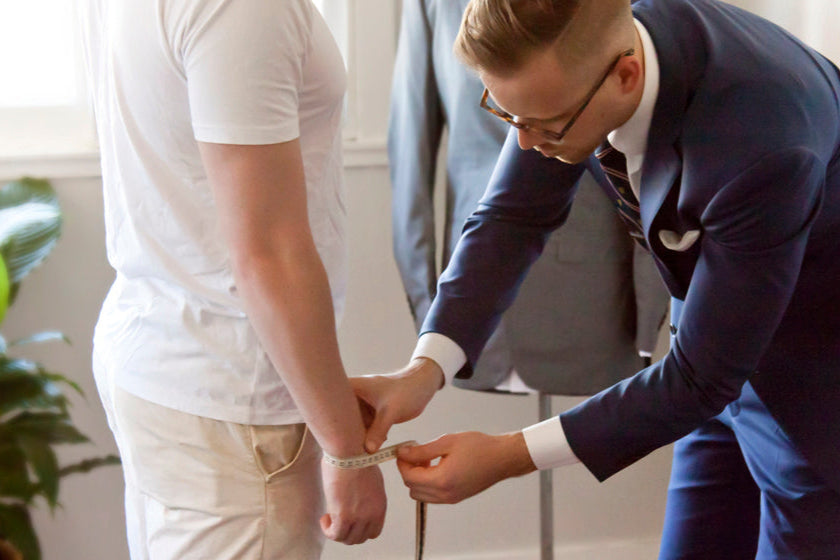
2. Design and measurements. You choose cloth, lapel, buttons, pockets, lining and trouser details. We then measure you, taking posture and proportion into account, not just numbers on a tape.
3. First fitting. Your garments are ready to try on within roughly five to eight weeks of measuring.
4. Final fitting and collection. Any refinements are made, usually within one to three days, then you take the suit home.
Every garment is covered by our Perfect Fit Guarantee: if something isn’t right, we keep adjusting until it is, with no cap on alterations. Customisation such as linings and monograms is included in the price.
You can read more about the full service on our women’s tailoring page.
What it costs
Women’s suits currently start from $1,275 for a two piece, with jackets on their own from $955. Price is driven mainly by the fabric you choose and the jacket construction. The full price list is published on our website so you can see where each option sits before you come in.
If you can’t get to a studio
We have studios in Brisbane, the Sunshine Coast, the Gold Coast, Toowoomba, Newcastle, Sydney, Canberra, Melbourne and Launceston. If none of those are convenient, our Virtual Tailor runs a guided video consultation, and our Travelling Tailor can come to your home or office.
A suit that fits from the first wear
The point of a made to measure suit isn’t luxury for its own sake. It’s that you stop thinking about the jacket. It sits where it should when you stand up to speak, and the trousers stay put through a long day. If that hasn’t been your experience with ready to wear, it’s worth seeing what changes when the pattern starts from your measurements.
Book a complimentary consultation in studio or online. There’s no obligation, and you’ll leave with a clear idea of cut, fabric and cost.
Frequently asked questions
How much does a made to measure women’s suit cost? At Suit Society, women’s two piece suits currently start from $1,275 and jackets from $955. The final price depends on the fabric and construction you choose, and customisations such as linings and monograms are included.
How long does a tailored women’s suit take? Allow around seven to nine weeks from your first appointment to collection. If you have a fixed date, tell us at your consultation so we can plan around it.
Can I order just a jacket? Yes. Jackets can be ordered on their own and are often the most versatile first piece, because they can be worn with trousers, skirts or dresses you already own.
Can I be measured without visiting a studio? Yes. Our Virtual Tailor service runs the consultation by video, and our Travelling Tailor can visit your home or workplace.