How to Build a Tailored Work Wardrobe for Women
Most women’s work wardrobes are built by accident. A blazer bought for an interview, trousers from a sale, a dress for a conference, a jacket that matched nothing once the original skirt wore out. Every piece made sense on the day. Together, they rarely make a week of outfits.
A tailored work wardrobe takes the opposite approach: a small number of well fitted pieces, chosen to work with each other, so getting dressed for a board meeting, a client lunch or a long day on site takes a minute rather than twenty.
The quick answer
Start with one suit in a versatile dark colour that can be worn together or as separates, add a second pair of trousers or a skirt, a contrasting jacket, and three or four tops that work under both. Choose fabrics for how often you’ll wear them and the climate you’ll wear them in, and prioritise fit over quantity. Five to seven tailored pieces, chosen well, cover most professional weeks.
Start with the suit you’ll wear most
Your first piece should be a two piece suit in navy, charcoal or a mid grey. These colours work in every industry, pair with almost any top, and look as appropriate in a boardroom as at an evening function.
The jacket and trousers will also be worn separately far more than together, so choose a cut that works both ways:
• A single breasted jacket is the most versatile and sits comfortably over shirts, knits and dresses.
• A straight or wide leg trouser in a mid or high rise is easy to wear with flats or heels.
Fit is everything here. A jacket that fits the shoulders, bust and waist at once is the piece you’ll reach for every week. Our guide to how a woman’s suit should fit explains what to look for, point by point.
Add a second bottom
Trousers take more wear than jackets. A second pair in the same cloth doubles the life of the suit and gives you two options for the same jacket. Alternatively, a skirt or a pair of trousers in a different cut (wide leg if your first pair is straight, for example) adds variety without new colours.
Add a contrasting jacket
The second jacket is where your wardrobe starts to multiply. Choose one that works with the trousers you already own:
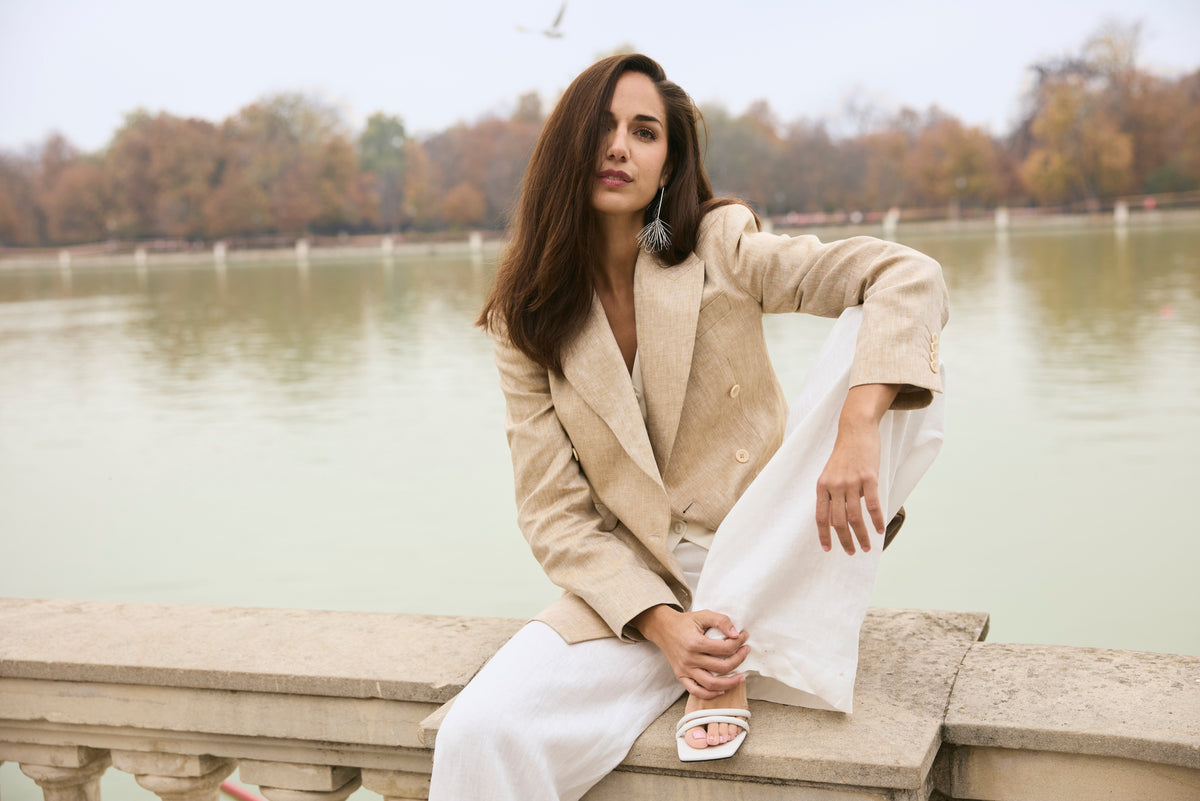
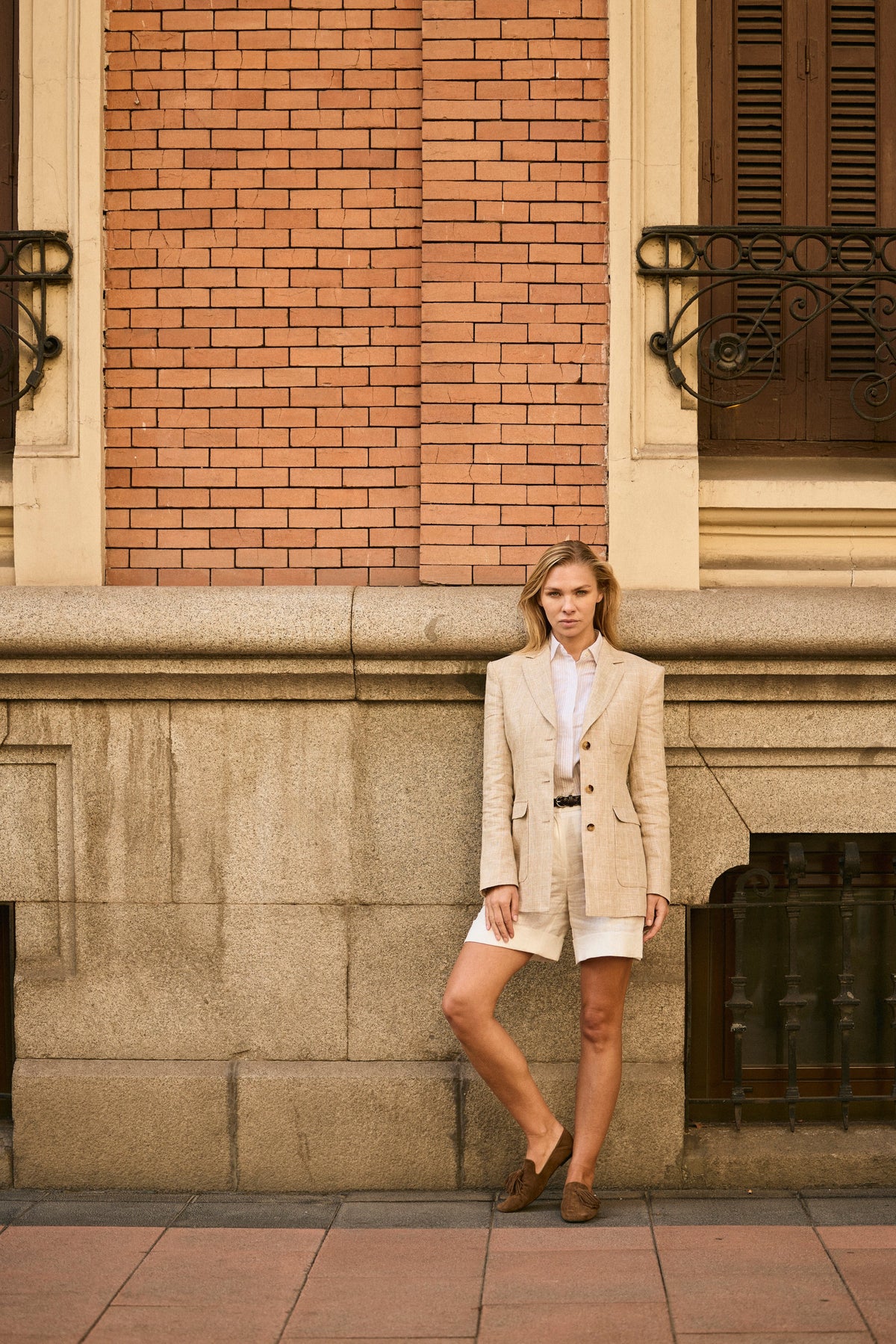
• A camel, beige or cream jacket pairs with navy, charcoal and black trousers and brightens the whole wardrobe.
• A subtle check or pinstripe adds texture and works with plain trousers.
• A double breasted jacket gives a sharper, more formal option for presentations and events.
Our current women’s suiting collection includes single and double breasted jackets in navy, grey pinstripe, cream pinstripe, beige, black and white, all made to measure.
The tops
Three or four tops will see you through most weeks: a crisp white shirt, a soft blouse or shell in a neutral, and a fine knit for cooler months. Keep colours that work with both your suit and your contrasting jacket.
Choose fabrics for your week, not the shop floor
In most Australian workplaces, a lightweight wool is the most useful suit cloth. It holds its shape through a long day, resists creasing and breathes better than synthetics.
In Brisbane, on the Gold Coast or the Sunshine Coast, an open weave wool or a wool and linen blend will feel noticeably cooler through summer. In Melbourne, Canberra or Launceston, a slightly heavier wool and an overcoat earn their place. Our women’s overcoats are designed to sit over tailoring.
For more on cloth choice, see our guide to suit fabrics for Australia’s climate. Jacket construction matters too, especially for pieces worn several days a week; our explainer on fused, half canvas and full canvas sets out the options.
A simple build plan
Rather than buying everything at once, build in stages:
1. First: a navy or charcoal two piece suit and two or three tops.
2. Next: a second pair of trousers or a skirt in the same cloth.
3. Then: a contrasting jacket that works with what you own.
4. Later: a second suit in a different colour or a lighter summer weight, and an overcoat if your winters call for one.
Even the first stage gives you several combinations. By the third, you have a fortnight of outfits without repeating the same look.
Look after it
Rotate pieces rather than wearing the same suit every day, hang jackets on a wide shaped hanger, and dry clean sparingly. Spot clean and press between wears instead. Well cared for tailoring lasts years, which is what makes the investment worthwhile.
Why tailored, and why made to measure
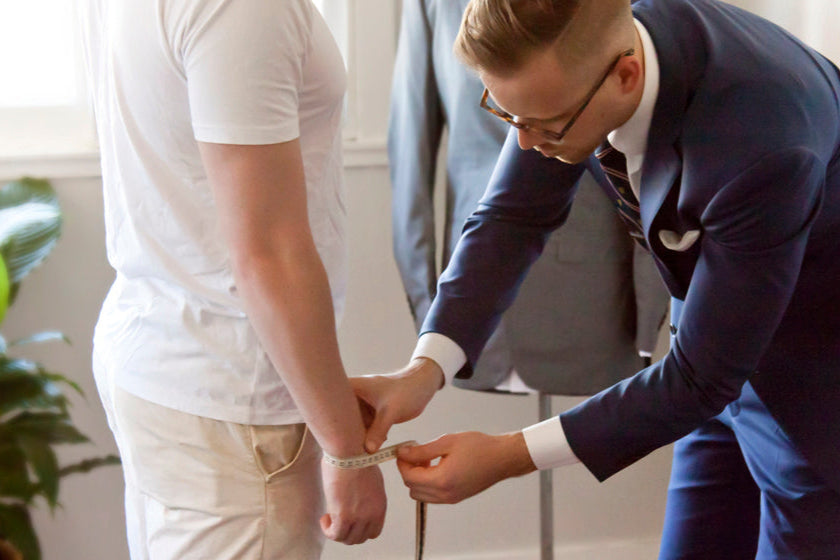
Women’s ready to wear suiting is cut to a single fit model per size, and very few women match her in shoulder, bust, waist and hip at once. Made to measure solves that at the pattern, so every piece in the wardrobe fits the same way and works together.
At Suit Society, women’s suits start from $1,275 and jackets from $955 on our current price list, with linings and monograms included and every garment covered by our Perfect Fit Guarantee. Because we keep your measurements on file, adding pieces later is straightforward. Our women’s tailoring page explains the full process.
Book a complimentary consultation to plan your first pieces. Bring a list of what you already own, and we’ll help you build around it.
Frequently asked questions
How many suits does a professional woman need? Most women can cover a working week with one or two suits worn together and as separates, plus a contrasting jacket and a few tops. Rotation matters more than quantity.
What colour should my first work suit be? Navy, charcoal or a mid grey. They suit every industry, work with almost any top and can be worn as separates.
Is it better to buy a suit or separates? A suit gives you both. The jacket and trousers can be worn together for formal days and separately with other pieces for the rest of the week.
Can I add pieces to my wardrobe later? Yes. Once your measurements are on file, ordering a second jacket, trousers or skirt is straightforward and every piece will fit consistently.