The Bridal Suit: How to Wear a Tailored Suit on Your Wedding Day
A bridal suit is no longer an unusual choice. Brides marry in suits at registry offices and in vineyards, at city restaurants and on beaches, sometimes for the whole day and sometimes for the reception after a ceremony gown. Couples where both partners wear suits are now a regular part of our wedding calendar.
What hasn’t caught up is the advice. Most of what you’ll find online is a gallery of pictures. That helps with inspiration, but it won’t tell you why one white suit looks deliberate and another looks like office wear, or how far ahead to start. This guide covers the decisions that actually matter.
Can a bride wear a suit?
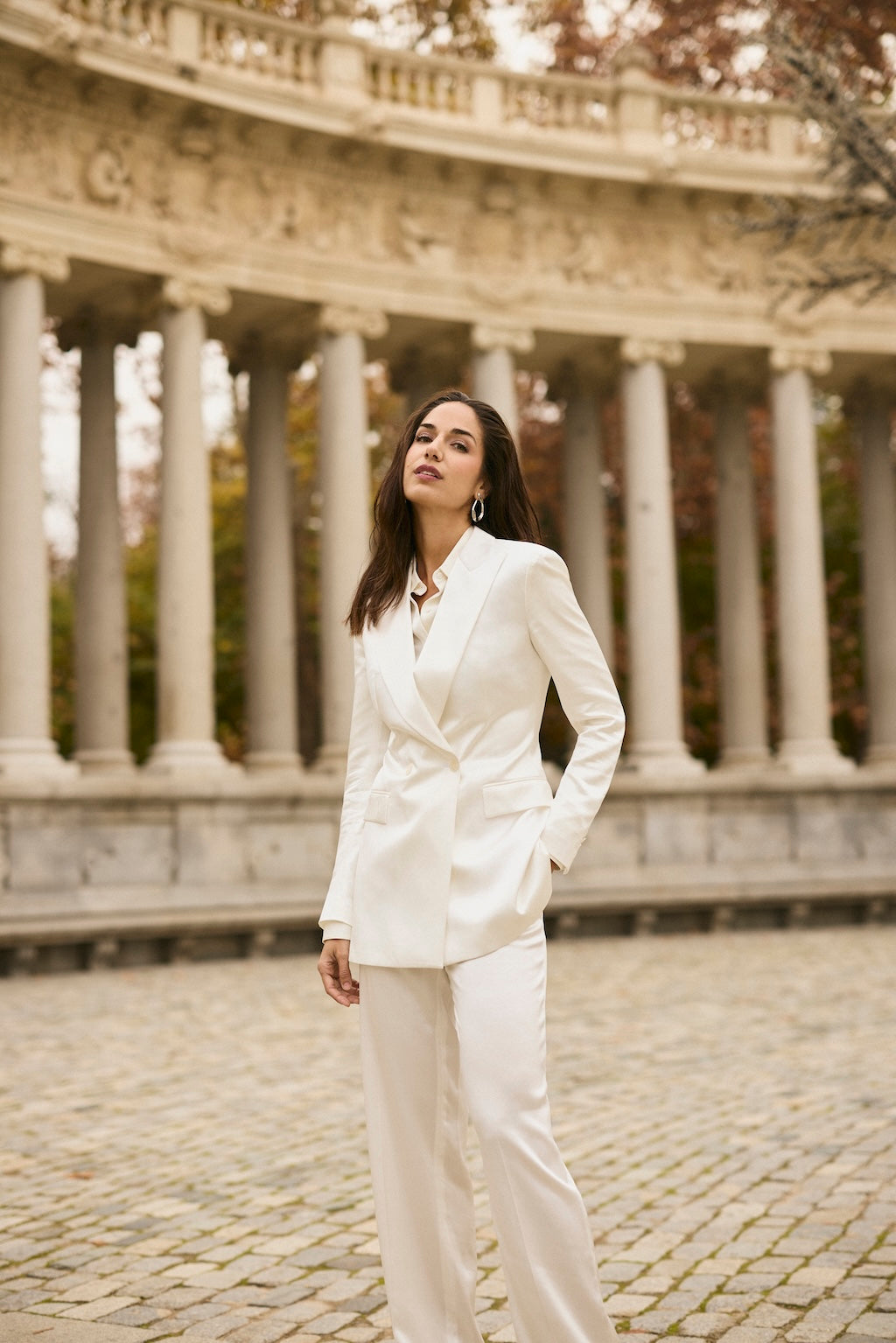
Yes, and it’s now common enough that no one will think twice. The question is less whether a suit is appropriate and more which suit suits the wedding. A softly structured ivory suit in a wool and silk blend belongs at a formal evening reception. A relaxed linen suit with wide trousers belongs at a coastal ceremony in the afternoon. Both are bridal. They just answer different briefs.
Start with the setting, not the suit
Before choosing a colour or a cut, settle three things: the time of day, the venue and the season. They decide almost everything else.
Daytime and outdoors. Lighter cloths, softer construction, and colours that work in direct sun. Wide or straight leg trousers in a breathable fabric will keep you comfortable through photographs in the heat.
Evening and indoors. More structure, richer fabrics with a little sheen, and details such as a satin faced lapel or covered buttons. If the invitation says black tie, a tuxedo inspired bridal suit is a lovely fit. Our guide to when you actually need a tuxedo in Australia explains what that dress code means in practice.
Cooler months and southern venues. A Tasmanian or Victorian winter wedding can carry heavier wool, a waistcoat, even a tailored overcoat for arrival photographs.
Choosing the colour
White and ivory. The classic choice. Pure white can look stark in strong Australian light and against some skin tones; soft white, ivory or cream is usually more forgiving in photographs. Look at swatches outdoors if you can, not just under studio lighting.
Champagne, blush and pale neutrals. Warm, flattering and a little less expected. These read as bridal without the formality of bright white.
Black or deep navy. Striking at an evening wedding, particularly as a sharply cut tuxedo style suit. Pair it with a white shirt or camisole and the result is unmistakably intentional.
Colour. Sage, powder blue, dusty pink and even bold reds appear more and more, especially at relaxed or second weddings. If you go this way, coordinate with your partner and the bridal party so the palette holds together in group photos.
Choosing the cut
Jacket
The jacket sets the tone. A single breasted jacket with a peak or shawl lapel looks clean and formal. A double breasted jacket gives a stronger, more fashion forward line and photographs particularly well. Cropped jackets suit high waisted trousers and show off the waist; longer jackets look elegant with wide trousers and feel more traditional.
What matters most is fit through the shoulder and bust. A bridal jacket will be photographed from every angle, often with your arms raised, so it needs to sit cleanly when you move. Our guide to how a woman’s suit should fit explains what to look for point by point.
What goes underneath
This is where a bridal suit becomes yours. A silk camisole, a lace bodysuit, a fine knit, a crisp shirt with a dramatic collar, or nothing at all under a well fitted double breasted jacket. Decide early, because it changes how the jacket should be cut at the neck and chest.
Trousers or skirt
Wide leg trousers create a gown like movement as you walk and look beautiful in motion. A straight leg is timeless. A slim, ankle length trouser suits a city or registry wedding.
Fabrics that photograph well and survive the day
Your bridal suit has to look as good at the last dance as it did at the ceremony. A few principles:
• Wool and wool blends hold their shape through a long day and resist creasing better than almost anything else. A lightweight wool is often the most practical bridal choice in Australia.
• Wool and silk adds a subtle sheen that looks luxurious in evening light.
• Linen and linen blends are wonderfully cool for summer and coastal ceremonies but will crease. Many brides decide that a relaxed, lived in look suits the setting. If you’d rather avoid it, a linen and wool blend is a good compromise.
Our fabric guide for Australia’s climate covers each of these in more depth.
The details that make it bridal
Small decisions turn a well made suit into a wedding suit. A lining in a colour or print with personal meaning. A discreet monogram with your new initials or your wedding date inside the jacket. Covered or pearl effect buttons. A satin lapel. At Suit Society, linings and monograms are included rather than charged as extras, so you can make those choices freely.
Planning both looks together
If your partner is wearing a suit too, plan the two outfits together rather than separately. They don’t need to match. They need to belong to the same wedding. Common approaches include the same cloth in different cuts, complementary colours from the same palette, or one light and one dark suit with a shared detail such as matching lining. Our weddings service is set up to dress the whole party, and having both partners measured by the same team makes coordination far easier.
When to start
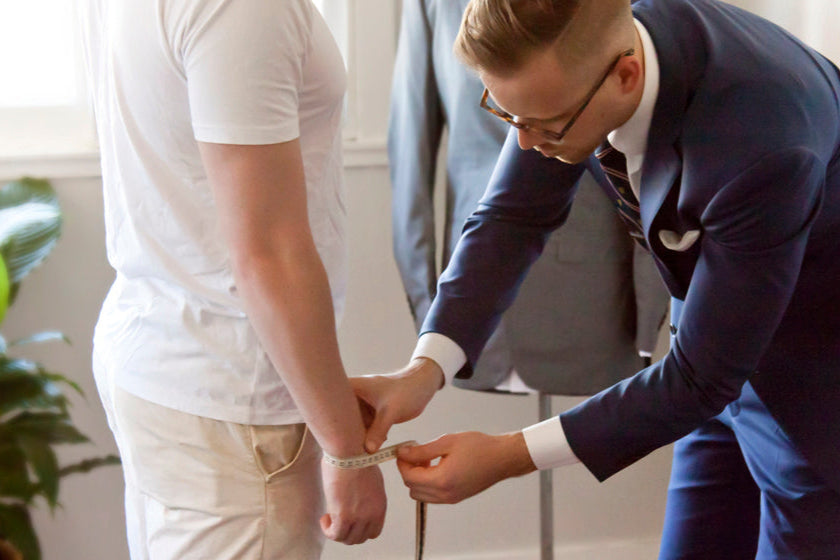
Allow at least eight to twelve weeks from your first appointment, and more if your date falls in the busy spring or autumn seasons. Bodies change in the lead up to a wedding, so your fittings are scheduled to give room for final adjustments. Our wedding suit timeline sets out each stage in detail.
If you’re travelling to your wedding, or live far from a studio, our Virtual Tailor can begin the process by video.
Your next step
The best way to start is a relaxed conversation with fabrics in hand. Bring photos of your venue, your inspiration images, and if you like, your partner.
Book a complimentary wedding consultation at your nearest studio or online. You can also explore our current women’s suiting, which includes white, cream and beige pieces that make a natural starting point.
Frequently asked questions
Can a bride wear a suit instead of a dress? Yes. Bridal suits are now common at ceremonies of every kind, from registry offices to formal evening receptions. The key is choosing a colour, cloth and cut that suit the venue and time of day.
What colour should a bridal suit be? White and ivory are the traditional choices, with ivory and soft white usually more flattering in strong light. Champagne, blush, black and pale colours are all popular alternatives.
How far in advance should I order a bridal suit? Start at least eight to twelve weeks before the wedding, and earlier during peak seasons, so there is time for fittings and final adjustments.
Can my partner and I be fitted together? Yes. Planning both outfits with the same tailor makes it much easier to coordinate cloth, colour and detailing so the two looks work together.